Why “Good Rhythm” Is Harder Than It Looks
Feb 09, 2026
When pipers talk about improving their playing, the conversation usually goes straight to fingers, embellishments, or tone. But underneath all of those skills sits something far more fundamental, and far more powerful.
Time.
Rhythm isn’t a decorative extra in music. It’s the framework that makes music possible at all. And for bagpipers, understanding time more clearly is often the fastest way to unlock cleaner technique, steadier playing, and better musical results.
Music Can’t Exist Without Time
Sound isn’t a static thing. It’s vibration – molecules moving through the air – and movement only exists over time. Unlike a painting or a photograph, music can’t exist all at once. It has to unfold.
That makes piping, by definition, a time-based activity. Every note you play, every gracenote you insert, every tuning adjustment you make is about how events are placed in time. When something sounds “off,” it’s rarely random. It’s usually temporal.
The Beat Is the Anchor
At the heart of rhythm is the beat: a regularly recurring pulse that everything else relates to.
Think of the beat as the centre of gravity. Notes, gracenotes, and embellishments don’t float freely – they orbit that pulse. Even in simple tunes like Twinkle Twinkle Little Star, there are more notes than beats. The magic comes from how those notes are organised around the beat, not from the notes themselves.
For pipers, this is critical. Listen to a top player like Angus MacColl. You’ll hear dense, complex embellishment work – but none of it interferes with the beat. Everything is precisely placed. The beat remains clear, stable, and unmoving underneath the surface detail.
Why Time Matters Even More on Bagpipes
The Great Highland Bagpipe is a surprisingly restrictive instrument. You can’t control dynamics. You can’t bend pitch. You can’t stop the sound.
So what actually separates average piping from great piping?
Time.
A “heavy left foot” in piobaireachd is a time issue. Rushed gracenotes are a time issue. Crossing noises are usually timing problems, not finger problems. Even tuning is about time – you’re adjusting vibration rates so they align.
When an embellishment sounds too big, it’s often because it’s taking up too much time. When something feels weak, it may not be getting enough.
The Natural Human Tendency to Rush
Left untrained, humans almost always execute early relative to the beat. It’s just how our brains are wired. You can see it anytime untrained people try to clap along with music. The claps creep forward.
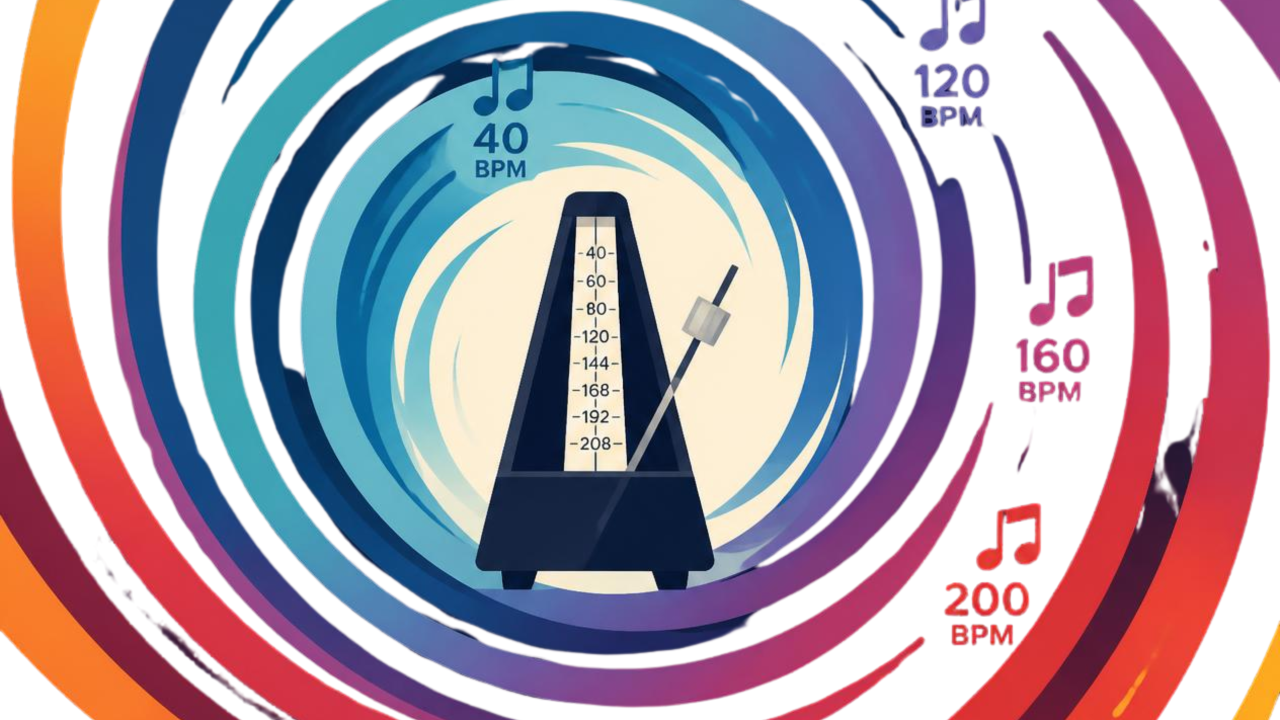
This is exactly why the metronome matters.
It's not a punishment, or a creativity killer. It's an honest reference point. The metronome shows you where the beat actually is – not where you feel it is.
Practicing with a metronome trains you to place notes intentionally, rather than reacting instinctively.
How to Spot Time Problems in Your Playing
When something doesn’t sound right, ask where time is involved.
-
Band sounds messy? That’s a unison timing issue.
-
Embellishments sound muddy? They’re likely mis-sized in time.
-
Tune feels unstable? The beat probably isn’t consistent.
Instead of thinking “this is bad,” you can ask, “what’s happening relative to the beat?” That question alone can save hours of unfocused practice.
Small Rhythm Work, Big Payoff
Rhythm work often gets pushed aside because it doesn’t feel exciting. But its effects compound.
A small, consistent investment in rhythm fundamentals improves everything downstream: cleaner technique, tighter band playing, more confident tempo, and stronger musical feel.
Think of rhythm as the operating system. When it runs well, everything else works better.
Music isn’t just the art of sound. It’s the art of time.
The beat isn’t there to restrict you – it’s there to support you. When you learn to organise your playing around time more deliberately, the instrument starts working with you instead of against you.
And that’s where real progress begins.
Want to work on your own rhythmic development? Check out our Rhythm for Bagpipers course, or join one of our monthly memberships to embed rhythm in your practice with weekly live classes and on-demand rhythm training!
Stay connected - subscribe to our free Weekly Digest!
Get bagpipe knowledge delivered to you every Monday! Tips and tricks, podcasts, special offers, and more.
We hate SPAM. We will never sell your information, for any reason.